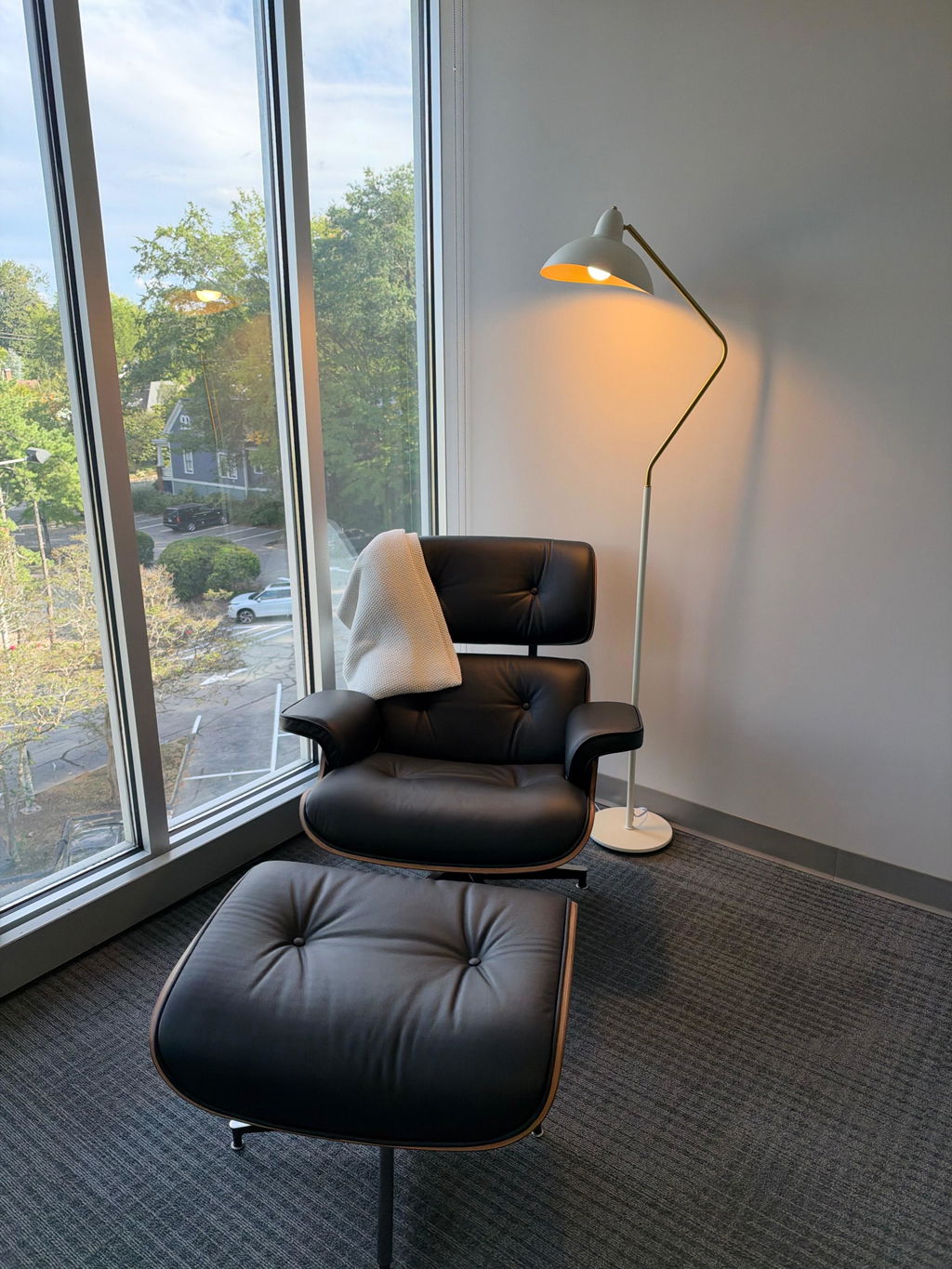


You finally get the sofa positioned just right. The coffee table sits at the perfect angle. The cushions are fluffed, and the throw is folded just so. And yet the room still feels unfinished, like a sentence missing its last word. Then you bring in a chair angled near the window or tucked into that empty corner by the shelf, and the whole room breathes differently. Guests aren't crowded onto one sofa. The space finally looks planned, not just filled. One chair does more work than most people expect.
Choosing living room chairs isn't as simple as picking whatever looks good in a showroom. Whether you're furnishing a compact flat in London, a family house in the suburbs, or a design-forward home somewhere in between, the right chair depends on how you actually live, not just how the room photographs. This guide covers comfort, size, materials, and placement, so you can pick a chair you'll still be happy with years from now.
There's no single chair that's best for everyone. The best living room chair is the one that matches your comfort needs, your room size, how you'll use it, and the material and style that suit your household.
What Makes a Good Living Room Chair?
A good chair has to look right in the room and feel right when you sit in it. Skip either one, and you get a decoration nobody wants to use or comfort that clashes with everything around it.
Seat depth matters more than most buyers realize: too shallow and you feel perched on the edge; too deep and your feet barely reach the floor. Back support should hold your spine naturally, and arms set too high or too low make your shoulders do work they shouldn't. A solid, well-jointed frame under good padding is what keeps a chair comfortable after months of use.
Proportion matters just as much. A chair that's too big looks like it's fighting for space; one that's too small in a large living room can look lost. Walk around your space and picture the chair in its spot. Can you still move around it, and will it sit well next to the sofa without overpowering it?
|
What to measure |
Why it matters |
|
Chair width |
Prevents overcrowding |
|
Chair depth |
Helps maintain walking space |
|
Seat height |
Affects comfort |
|
Doorway/stair/lift access |
Makes delivery easier |
|
Space around chair |
Keeps the room functional |
Which Type of Living Room Chair Is Right for You?
Not every chair does the same job, even if they look similar in a showroom.
|
Chair type |
Best for |
Space needed |
Main benefit |
|
Accent chair |
Style & extra seating |
Low–Medium |
Adds personality |
|
Lounge chair |
Reading & relaxation |
Medium–High |
Deep comfort |
|
Armchair |
Everyday seating |
Medium |
Versatile |
|
Swivel/recliner |
Long sitting |
High |
Relaxation and flexibility |
● Accent chairs solve an awkward empty corner or a room that feels visually flat. A bold color or shape gives the eye somewhere to land. They suit smaller flats well, where one good accent chair adds more character than a second sofa.
● Lounge chairs are for sinking into with a book after a long day. Deeper seats, generous padding, and a recline that supports your back. They need more floor space and suit larger rooms, where they become their own quiet corner.
● Armchairs are the workhorses: practical, comfortable for daily use, flexible for formal or relaxed rooms. Families lean on them for everyday sitting and guest seating.
● Swivel or reclining chairs suit television rooms or anyone sitting for long stretches, letting you turn toward the conversation or stretch out fully. They need more space, so they suit rooms with room to spare.
Five Questions to Ask Before You Buy
- How much space do you actually have?
- What will you mainly use the chair for?
- How often will it be used, daily, or mostly for guests?
- Which material suits the way your household lives?
- What style already exists in the room it needs to sit in?
Answer those, and choosing between an accent chair, lounge chair, armchair, or recliner becomes far more straightforward than browsing by looks alone.
Choosing Chairs for Flats and Houses
In a smaller flat, every piece of furniture has to earn its space. Slimmer frames and raised legs tend to work better than a solid, heavy base. They help a room feel bigger and move more easily through the narrow staircases and communal lifts common in period conversions and UK apartment blocks.
Larger houses give you more room to be generous. A single statement chair can hold its own in a bigger space, and two matching chairs opposite the sofa create a proper conversation area rather than one long row facing a television. Detached and semi-detached homes can also support separate seating zones. A more formal arrangement near the entrance, say, and a relaxed reading corner elsewhere, as long as each piece stays in proportion with the room.
Across both, think about how the room actually gets used: everyday relaxation, family gatherings, entertaining guests, or a quiet reading spot..
What to Check Before Buying a Living Room Chair
● The frame determines whether a chair still feels solid in a few years or starts creaking and sagging; it's worth asking what it's made of before you commit.
● The seat's depth, firmness, and cushion construction affect day-to-day comfort far more than the fabric on top.
● The upholstery should suit how the chair will actually be used; daily family use has different needs than a chair that's mostly for show.
● The proportion should relate to your sofa, coffee table, rug, and the room as a whole, not just look good on its own.
What Material Is Best for Living Room Chairs?
● Leather reads as quality and is generally easy to wipe down, which can suit households that entertain often. Some finishes feel less comfortable in warmer rooms, so it's worth checking the finish and where the chair will sit.
● Fabric is the most versatile soft, comfortable, and available in far more colors and textures than leather or velvet, though it generally needs more regular care.
● Velvet makes a statement with a rich texture that catches the light, but it needs more careful maintenance and may not suit households with young children or pets.
● Wood and mixed-material chairs often suit natural, mid-century, or contemporary interiors and are generally easy to maintain.
|
If your priority is… |
Consider… |
|
Easy everyday cleaning |
Leather |
|
Soft, relaxed feel |
Fabric |
|
Statement appearance |
Velvet |
|
Natural/structured look |
Wood or mixed materials |
|
Family use |
Durable, easy-care upholstery |
|
Formal setting |
Refined upholstery or leather |
These are general starting points, not fixed rules. Comfort and upkeep vary with construction, finish, and how heavily a chair gets used.
How to Match a Living Room Chair With Your Sofa
A chair doesn't need to match your sofa exactly, and in most well-designed rooms it doesn't; an exact match can look like a catalog set rather than a room someone thought about. Coordinating works better: a neutral sofa with one statement-coloured chair, the same colour family in a different texture, or a neutral chair beside a patterned sofa.
If you're mixing styles, keep pieces connected through similar visual weight, a repeated colour, or matching wood tones.
Where Should You Place a Living Room Chair?
● Beside the sofa: A continuous seating line that keeps conversation easy.
● Opposite the sofa: A proper conversation setup, facing each other rather than everyone toward a screen.
● Near a window: A natural spot for a lounge chair, with good daylight for reading.
● In an empty corner: Often the most useful placement, filling dead space.
● Around a coffee table: Ties the seating together and keeps drinks and books within reach.
How Many Chairs Does Your Living Room Need?
There's no single right number. It depends on room size, sofa size, walking space, and how often you host.
Small living room: Usually one chair, chosen for character more than capacity.
Medium living room: Two chairs typically balance extra seating with keeping the room easy to move through.
Large living room or house: Often room for two or more, sometimes split across separate seating zones.
Quick Guide: Which Chair Should You Look For?
|
Your situation |
A good starting point |
|
Small UK flat |
Compact accent chair |
|
Reading corner |
Lounge chair |
|
Everyday family use |
Supportive armchair |
|
Luxury interior |
Leather or sculptural chair |
|
Additional guest seating |
Armchairs or matching accent chairs |
Common Mistakes to Avoid
● Choosing looks over comfort — A chair you avoid sitting in isn't doing its job.
● Buying without measuring — The single most common and most avoidable mistake.
● Choosing a chair that's too large — Impressive alone, overwhelming once it's in place.
● Ignoring the sofa's style — A chair picked in isolation can feel like it wandered in from a different house.
● Forgetting the chair's main purpose — A stunning but uncomfortable chair ends up unused.
● Following trends blindly — Trends move on; your living room stays put.
A Simple Checklist Before You Buy Living Room Chairs
- Have you measured the available space?
- Does the chair fit through your doorway?
- Is the seat comfortable for your intended use?
- Does the chair work with your sofa?
- Is the material suitable for your lifestyle?
- Does the colour work with your existing décor?
- Is there enough space to move around it?
- Does the chair suit the room's overall style?
- Will you still like the design in a few years?
Find the Right Living Room Chair for Your Space
By now you know roughly what type of chair suits your room, how much space you're working with, which material fits your lifestyle, how to coordinate it with your sofa, and where it should sit. That's really the whole decision.
Now that you know what your room needs, explore Luxe Furnishes' collection and find a chair that fits your space, style and everyday comfort.
FAQs About Living Room Chairs
What type of chair is best for a living room?
The best chair depends on how you use the room. Choose an accent chair for style, a lounge chair for relaxation, or an armchair for flexible everyday seating.
What is the most comfortable chair for a living room?
Comfort comes down to seat depth, back support, and cushion firmness rather than any one chair type. Sit in a chair before buying whenever you can.
How do I choose a living room chair?
Start with how the chair will be used, then measure your space, check it works with your sofa, and pick a suitable material.
Should a living room chair match the sofa?
Not always. Coordinating tones and textures usually looks more considered than an exact match.
Where should an accent chair be placed?
Empty corners, beside a window, or opposite the sofa, depending on whether you want it for looks, conversation, or reading.
How much space should be between a sofa and a chair?
Enough that people can walk between them without turning sideways, and close enough that conversation still feels easy.